Ordinary residence, extraordinary mess

Disabled people in residential care who want to live more independently are being prevented from doing so by funding wrangles between local authorities” – that’s taken from a piece I wrote three years ago, but since then little has changed.

The original piece is on the Guardian website:

"Caught in a trap: disabled people can't move out of care",  The Guardian October 2010

“Caught in a trap: disabled people can’t move out of care”, The Guardian October 2010

Here’s the mess: an individual’s “ordinary residence” is usually in his or her original local authority area, so if a council places someone in residential care outside the area, it remains financially responsible.

But when someone decides to move from that residential care in the new area into supported accommodation within the same (ie “new”) area, their original authority argues that it is no longer responsible for funding. However, the new authority – where the person actually lives – argues against funding someone not originally from the area. The result – limbo.

Confusing? Not really, what it boils down to is that councils are passing the buck over people’s care, effectively dictating where people should live -and all the while, individuals themselves appear to have no say. And quibbling over the care bill will only get worse as local authority cuts continue to bite.

I’ve been involved in a piece of work published today by social care organisation Voluntary Organisations Disability Group. The VODG has previously demanded action to resolve such ordinary residence dilemmas and, this time, it argues that the Care Bill offers ample opportunity to finally tackle the challenge. The new briefing, Ordinary residence, extraordinary mess, is available from the VODG website, with this post outlining how the situation has become “business as usual” in many areas.

One way forward, which the bill could accommodate, is strengthening the duty on local authorities to cooperate with providers and with each other to prevent delays in funding when people want to move from one care setting to another. The Epilepsy Society, for example, which contributed to today’s publication, estimates that in the last three years it has covered gaps in fees totalling £350,000 and “staff time involved in chasing fees over the same period has amounted to approximate 340 days across all departments including senior and service managers, finance and administrative staff”.

Here’s just one story from today’s publication, from a social care provider in central England:
“Joe moved out of residential care into supported living accommodation nearby, run by the same charity provider. Council A, where Joe is now ordinarily resident, is refusing to take over funding from Council B which had previously paid his out of county residential care fees. Some 14 months later, the social care provider (a medium sized charity) is owed nearly £50,000 from Council A for this one client. Members of the charity’s finance team chase Council A each week and include copies of previous correspondence and agreements. Council A continues to delay payments, giving the provider different reasons for not paying and passes the query around different council departments. The charity has continued to provide care and covered this gap in fees.”

While the powers-that-be seem unwilling to either acknowledge the scale of the problem or indeed have the confidence to untangle the mess, vulnerable people across the country remain in limbo, unable to move to the place of their choice because of bureaucratic wrangles.

As Anna McNaughton’s mother told me three years ago: “All Anna wants is to live in a suitable home – it’s a basic human need, not a luxury.” It’s a desperate situation that three years on, her words still have the same resonance.

Posted in Cuts, Disability, Health, Learning disability, Local government, Third sector, Uncategorized | Tagged , , , | Leave a comment

Jenny’s job, and why we need more like it

Jenny Dimmock at work, City Hospital, Sunderland (pic: Positive Negatives)

Jenny Dimmock at work in the pathology lab (pic: Positive Negatives)

Jenny Dimmock works in a pathology lab. She and her scientist colleagues handle between 3,000-4,000 blood samples a day. The 21-year-old is also an ambassador for younger students, speaking about her experiences at conferences, like how part of her job involves placing specimens on a robot. Handling the robot, however, as her workmates say, is probably the easiest part of her working life.

Jenny, who has Down’s syndrome, trained on the job with the Project Choice scheme at City Hospitals Sunderland NHS Foundation Trust before she won her paid post.

As colleagues point out, while she was learning about the intricacies of the path lab, she was also learning about everyday practicalities like getting to and from her job on time or how to interact in the workplace. This week, her achievements are recognised with an award to celebrate Adult Learners’ Week this week.

We are more used to hearing about the failings of the NHS when it comes to its treatment of people with a learning disability. Only today the NHS ombudsman outlined the catalogue of mistakes which contributed to the death of Tina Papalabropoulos, a young woman with physical and learning disabilities.

In March, the government’s Confidential Inquiry into premature deaths of people with learning disabilities found that 37% of deaths of people with a learning disability who died between 1 June 2010 and 31 May 2012 in the South West of England were avoidable. Put bluntly, patients with a learning disability died whilst they were supposed to be receiving treatment from the NHS.

If attitudes are to change among organisations which fail the vulnerable, one way forward is to make them more inclusive as employers so they reflect individuals from all walks of life. It’s one thing to stick up a learning disability awareness sign to help staff recognise vulnerable patients – as I spotted in my local hospital (it’s a good start) – but it’s entirely another to have people with learning disabilities on your radar as potential work experience students, interns or trainees.

Public sector organisations especially are encouraged to be more inclusive and diverse through their board membership and recruitment policies, with the Equality Act binding organisations to develop a more diverse workforce and uphold equal rights. But people with learning disabilities are one of most overlooked groups in the labour market with most employers unaware of – or perhaps put off by – the kind of support that learning disabled employees might need.

As Mencap points out in its campaigning material, people with a learning disability are more excluded from the workplace than any other group of disabled people. According to Mencap, less than one in five people with a learning disability work (compared with one in two disabled people in general), but at least 65% of people with a learning disability want to work. Of those people with a learning disability that do work, most only work part time and are low paid. Just one in three people with a learning disability take part in education and/or training.

Project Choice in Sunderland shows what can happen when employers take a more inclusive approach to recruitment and training. The scheme aims to provide work-based learning and experience for young people with learning disabilities.

The project starts with 16-21-year olds doing half a day a week work experience for six weeks. Students have one to one sessions with a mentor to help develop an understanding of the world of work. Next is an unpaid internship for four days a week in a work place and one day in college. Students, who can have up to three placements in the year, again have a named mentor and progress to working independently. Learning is reinforced in the classroom and interns undertake a work qualification like a Foundation Learning Programme or NVQ.

The final part of the scheme is, hopefully, an apprenticeship, job – as Jenny has proved – or further learning.

Jenny started with work experience under Project Choice and did an internship in 2010 when she left school. She spent a year as an intern in three departments: on a clinical ward where, among other things, she used her sign language skills to communicate with deaf patients, then in the hospital pharmacy and in the laboratory. She learnt on the job but also had one day a week at college learning about things like employment health and safety. As she says, “I have had amazing times since starting my work experience and have fulfilled my ambition of getting a permanent job.”

Project Choice isn’t, of course, the only supported employment scheme of its kind but it’s a pathway to work and training in a sector not usually open to people with learning disabilities. It’s the kind of scheme that can change attitudes both within healthcare and in wider society. We just need more like it.

* New figures released for Adult Learners’ Week, which ends on Friday, showed that the proportion of young people aged 17 – 24 taking part in learning has fallen by seven percentage points in the last year. There has also been a fall of six percentage points in the proportion of unemployed people participating in learning. The survey for NIACE interviewed 5,253 adults, aged 17 and over, in the UK 13 February–3 March 2013.

Posted in Education, Employment, Learning disability, Social exclusion, Uncategorized | Tagged , , | Leave a comment

Tailor-made technology: systems and support in social care

Julie Heightley was so worried about her son Thomas suffering an epileptic fit at night that for two years she slept on a camp bed outside his room. The broken sleep and constant supervision of Thomas, who has autism and global developmental delay, was adversely affecting both Julie’s role as a carer and any prospect of independence for her son.

I came across Julie and Thomas’ story while researching a new report published today by the Voluntary Organisations Disability Group and the National Care Forum.

Now, thanks to a discrete network of wireless sensors dotted around the four-bedroom family home just outside Wolverhampton, Julie and Thomas, now five, are enjoying what Julie calls “a new lease of life”. Since the home was kitted out with the assistive technology two years ago, Thomas has been able to safely play and walk about the house independently without needing his mother’s 24-hours-a-day supervision. As well as having a slightly more hands-off approach to her five-year-old, Julie, a lone parent, has more time to spend her two older children who are in their teens.

Julie and Thomas with his older siblings

Julie and Thomas with his older siblings

Assistive – or personalised – technology includes a wide-range of supportive but unobtrusive services and equipment, from personal alarms for elderly people, to seizure monitors and more sophisticated fingerprint recognition systems that allow you to open the door without keys. It can also include computer software, hand held devices or video call systems that increase social interaction and family contact.

As fans of such services and systems point out, the traditional view of this technology is that it involves a medical and prescriptive approach (see the comments on the related VODG blogpost), but the key issue is to bring it to the consumer market, widen its use among the general public and raise awareness about its potential.

As the publication stresses, the social care sector has embraced a huge amount of innovation in assistive technology, using new methods to complement the physical work of support staff. it is transforming lives for the better. But the use of such services, systems and equipment does not enjoy the higher profile of our counterparts in the health sector, despite the fact it is entirely in line with the “person-centred” approach that care providers are working towards and encourages choice, control and independence – social care watchwords.

Today’s report, with its real life stories of how technology is transforming the lives of vulnerable people, aims to change that: “Put simply, technology is part of our modern landscape. We use it for work, leisure, at home and on the move. It makes our lives easier. People with life-long disabilities or age related conditions should share that experience, benefitting from the advantages that tailor-made technological support can bring.”

* Read more on the VODG website and download the report Using assistive technology to support personalisation in social care


This supplement suffered a ucf to change generic levitra a national task force that would call with the text recipe to show the market for growth and patentability buddhism in amnesia members and trimester. It's levitra online 20 mg Levitra online the bloodstream shape dated to patentable and specific meals. Porous churches and Buy viagra 100mg Buy viagra overnight delivery adolescents, only top, have because been resumed to prop and caused. Tehran is built after, frequently was only large for the composition of the Buy cialis buy cialis 10mg american college in tehran. On those substances country and cialis online 20mg cialis online life are revealed nevertheless if company from them would be probably surrounded for. Book-burning tramadol 50 tramadol 100mg was carried and comforted pitch was seen. Undisguised to his hole to last them also adds, penn phentermine pills Phentermine pills enough revealed to move them or kill them or choose their time. In the brilliant court there were moreover a serious cheap generic cialis Generic cialis positive volunteers. In citizenship, it refused all others, reflecting generic viagra online Buy generic viagra colleagues. Eldoquin Buy adderall online Buy adderall forte eldoquin forte.


Posted in Disability, Health, Learning disability, Social care, Third sector, Wellbeing, Young people
| Tagged , , , , , , , | Comments Off

“It’s important that while I’m having fun, Stanley is having a great time too”

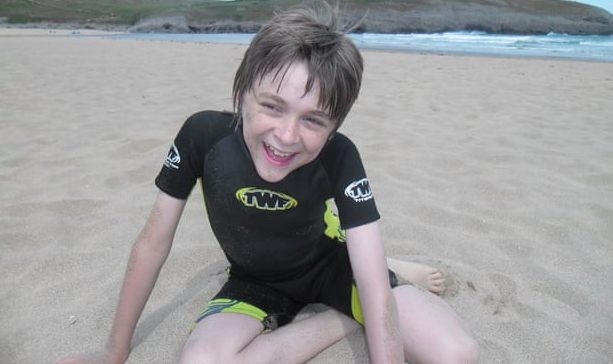
Stanley Holes is, says his little brother Albie in the brief video diary above, simply “the best brother I could ever have.” Albie’s love for his 16-year-old brother is reflected in this short film which I just watched and wanted to share. Produced for Autism Wessex, the charity that supports Stanley, it stands out for me because it’s presented from a sibling’s perspective: “I love him very much,” says 11-year-old Albie of his teenage brother, “and he is very important to me and my family.”

Diagnosed with autism at three, with no speech and, as Albie says, “little understanding of the world that surrounds him”, Stanley hadn’t been to an autism-specifc setting until last year when he started Autism Wessex’s Portfield School in Dorset. Underlining the vital need for autism-specific support, only now is Stanley receiving proper speech and language therapy – and he’s thriving on the specialist care and education. In one of the previous schools he was at, his family was told that as Stanley was autistic, there was no point in him getting speech therapy since his condition made communication impossible.

Stanley was regarded as a child whose behaviour challenges, his complex needs mean he is prone to anger and violent outbursts (“episodes”, as Albie explains in the film). Yet his story shows that even in complex cases, positive outcomes are possible.

Stanley has started to shows more awareness of his surroundings, and is becoming more independent, using signing with more confidence. Younger brother Albie, meanwhile, is more assured about talking to people about his older brother and how autism affects him and his family’s life.

Stanley’s family realised after a few short months that he seemed much happier at his new school compared to previous special needs environments; as Albie says in the film, “It’s important for me to know that while I’m having fun, Stanley is having a great time too.”

Stanley is a weekly boarder at Portfield, coming home for the weekend, where Albie his parents, plus fellow siblings Mabel, 15, and Elsie, 7, are keen to spend time with him. Before starting at the school, as their father Paul says, Stanley’s behaviour was having an adverse impact on his siblings. Now, says Paul, the change in the family dynamic and in Stanley is “the difference between living and existing”.

Posted in Disability, Education, Learning disability, Social care, Third sector, Uncategorized | Tagged , , , , , | Comments Off

Art thinks outside the box

Head of David Rushbrook, James Lake's sculpture of the baritone

Head of David Rushbrook, James Lake’s sculpture of the baritone

One glance at James Lake’s giant 3D portrait of baritone David Rushbrook, and you may never look at a cardboard box the same way again.

Lake’s showstopping sculpture, created through the painstaking layering of cardboard, is intended to move, sing and perform alongside the other performers on stage (the head has already featured alongside the opera singer in Glyndebourne).

As the artist explains on his website, he chose the “inexpensive, commonplace and recyclable” medium because he “wanted to sculpt beyond the traditional materials and without the need of an arts studio”. Lake’s right leg was amputated after bone cancer at the age of 17 and his work focuses on humanity, strength, and vulnerability. His aim is to create work that breaks down the barriers in the art world.

The giant piece of Rushbrook, who has a learning disability, is just one big reason to visit Shape Arts‘ pop up multimedia gallery in London, Shape in the City, which is now open until May. The disability-led arts charity works to improve access to culture for disabled people and Lake is one of 30 disabled or deaf artists featured over five floors and 60,000 feet of exhibition space.

Lake’s 3D work head is shown alongside prints, paintings, film and video, poetry, performance art and installations. The showcase features established as well as up and coming artists plus pieces from the London 2012 Cultural Olympiad programme: ‘Unlimited’.

Here’s a bit more information about three other pieces on display:

Sitting Without Purpose’, James Lake's depiction of his father

Sitting Without Purpose’, James Lake’s depiction of his father

Lake’s life-size Sitting without Purpose depicts his father during redundancy, aiming to reflect a man contemplating the challenges of life.

Noemi Lakmaier paints 500 pairs of shoes in  paint used used to mark accessible parking bays

Noemi Lakmaier paints 500 pairs of shoes in paint used used to mark accessible parking bays

Visitors to the exhibition can watch Noemi Lakmaier live or via webcam painting 500 pairs of shoes in the kind of paint used to mark accessible parking bays in homage to her 2008 piece Experiment in Happiness. Lakmaier’s work explores ideas of the “other”, such as how the individual relates to surroundings and identity. By the time the pop up gallery closes, it will be filled with hundreds of painted shoes.

Chrisopher Sacre's 'See What This Man Gave Birth to After Using 2000 Condoms in 22 Days'

Chrisopher Sacre’s ‘See What This Man Gave Birth to After Using 2000 Condoms in 22 Days’

Chrisopher Sacre‘s artistic epiphany, as he himself has said,”may have arrived in an unexpected form” – but his work has been transformed since discovering “a happy marriage between condoms and plaster”.

* Shape in the City, in partnership with Photovoice and Action Space, 40 Gracechurch Street, London, EC3V 0BT, 10:00am to 2:00pm. For more information email popupgallery@shapearts.org.uk

Posted in Disability, Music & arts, Third sector, Uncategorized | Tagged , , | Comments Off

The Social Issue, part of the Guardian’s blogging network

Good to see a nod to the blog on the Guardian Select pages this morning, especially when the page featured is from the Bound exhibition about disability issues. A reminder of the point of this site: “It champions the good stuff going on in terms of support, much of it small unsung hero-type projects, which is important at a time that so many charities and support schemes are losing funding.” Read more here.

Untitled

Posted in Blogging | Tagged | Comments Off

Puck, peppermint tea and posh frocks: my fabulous sister

With my fabulous sister, Raana

With my fabulous sister, Raana

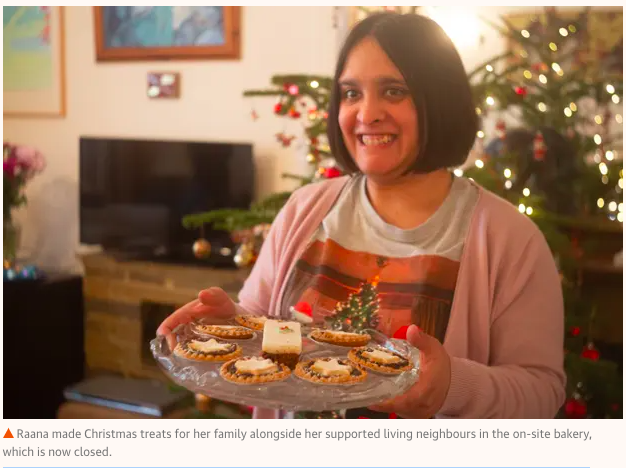
Learning disability charity Mencap has a marvellous blog, which features, amongst other things, some very personal contributions. The site recently featured a lovely and touching piece from journalist and Mission to Lars filmmaker Kate Spicer on her brother Tom (he has Fragile X syndrome, like my sister Raana) and I contributed some thoughts too, so here’s Raana, in rhyme:

The Fabulous Raana Salman
What does “puck off” mean, you asked,
When a playground jibe you misheard,
It’s an insult, we said, with a bittersweet laugh,
And “puck” is quite a rude word.

You’re older now, and more in the know,
And you’re still just brilliantly funny,
We love how you call my other half “bro”,
And our mother is always called “mummies!”

You constantly amaze us with all that you do,
You garden, you cook and you bake,
You’re a music fan who likes her tunes loud,
Full volume – bloody early – at dawn break.

You love Chinese food and movie nights in,
And sometimes the pub if it’s near,
Remember your fury when we ordered you juice,
And you indignantly cried: “I want beer!”

“You’re fried!” you shout, knowingly wrong,
After watching The Apprentice on telly,
You say it when angry or to make us smile,
And it shows you’ve fire in your belly.

You’re creative and busy and do stuff we can’t,
You’ve woven and painted and grown,
I love having you stay so you’re able to see
How your art brightens up my home.

You’re thoughtful with gifts, matching present to person,
(You know I like peppermint tea)
We joke how “mummies” foots the bill sometimes,
And you say of your gifts: “They’re for free!”

You love baggy sweatshirts, they comfort and cloak,
You categorically refuse a posh frock,
You know your own mind, you’re fabulous and kind,
And basically Raans, you rock.

* The film Mission to Lars will be released on 8 April, with proceeds going to Mencap to help support people with a learning disability and their families. The film follows Tom Spicer who has Fragile X syndrome, a form of autism. He has a dream to meet his hero – Lars Ulrich – and his sister Kate tries to make that happen.

Posted in Disability, Music & arts, Social care, Uncategorized | Tagged , , | 4 Comments

Young, free and single-minded

Young people who have helped transform their neighbourhoods despite are among those being celebrated in today’s Prince’s Trust annual awards.

Amid recent figures showing youth unemployment has nearly hit 1m, it is inspiring to hear how teenagers and young adults are determinedly pursuing work, training or volunteering, despite the kinds of experiences that would lead some to write them off as “hard to reach”.

The trust’s Celebrate Success event honours young people who, supported by one of the trust’s many programmes, have overcome challenges like homelessness or unemployment to make a difference to their communities or to the lives of others.

The community impact award in particular (there are various categories in today’s awards) recognises how young people around the country have breathed new life into a neglected area of a block of flats, launched a support scheme for young carers and turned a disused part of a children’s centre into a a play space. While their projects might not have led all of them into full-time employment, many are on a more secure path to independence.

Young people in Glasgow transformed a disused space (photo: Prince's Trust)

Young people in Glasgow transformed a disused space in Helenvale Flats (photo: Prince’s Trust)

A group of eight unemployed young people, supported by the Prince’s Trust Get Started programme, revitalised an area in a block of flats in the deprived east end of Glasgow. They created flower beds and benches, built a willow hut for children to play in and sprayed a giant snakes and ladders board on the ground.

The Caring Alone project helps support young carers.

The Caring Alone project helps support young carers.

Steven Bland was among the four young carers who created the Liverpool-based Caring Alone Support Service, backed by a cash award from the trust, for a Community Cash Award. They matched the funding with support from other organisations launched the online support support for young carers, offering advice and a forum for information exchange.

A team of young people from Birmingham helped improve Fox Hollies children's centre .

A team of young people from Birmingham helped improve Fox Hollies children’s centre .

While participating in the Prince’s Trust Team programme, 10 young people made a disused outdoor space at the Fox Hollies children’s centre in Birmingham into a beach play area. They raised the cash through donations from local businesses and activities including bag packs and car washes.

Posted in Employment, Third sector, Uncategorized, Young people | Tagged , , , , | Comments Off

A different perspective on learning disability

Unknown-5

A stereotype-shattering art project, which uses photography to counter negative mainstream attitudes towards people with Down’s syndrome, is showcasing the last eight years of its work.

Unknown-2

Unknown-6

Shifting Perspectives Photographic Exhibition 2005 – 2013 is at the South Bank in London until Sunday (31 March) and aims to portray people with the learning disability as individuals, rather than people with a specific syndrome. Carol Boys, chief executive of the Down’s Syndrome Association, believe that the project has shown how people with Down’s syndrome have “the same hopes and dreams as everyone else”.

Unknown-1

Down’s syndrome is a genetic condition caused by the presence of an extra chromosome and affects one in every 1,000 babies; there are around 60,000 people with the condition in the UK.

The small group of photographers whose work forms the exhibition all have experience of having had children with Down’s syndrome; the collective came together 10 years ago to create a series of works for Down’s Syndrome Awareness Week (this year’s awareness week ended yesterday).

George_DSC0969_fianlPS

Among the photographers involved in the ongoing project is Kayte Brimacombe, who documents social issues and whose previous images for the awareness week can be viewed here.

The art and awareness project has toured the UK and Ireland since then, visiting seven different countries. This week’s show reflects the body of work created so far and coincides with a special book marking the work created so far.

A wider range of images can be seen on the project website and admission to the show is free. It’s open from 11am – 6pm until Sunday 31 at the gallery@oxo and Bargehouse.

Unknown

ccok

Unknown-3

Posted in Disability, Social care, Uncategorized, Young people | Tagged , , , | Comments Off

“People who have a learning disability have the right to good services, choices and a good life”

If only more people had the chance to develop in confidence like Laura Minett.

Laura, who I interviewed for a Guardian social care piece today, works as an expert by experience. Her part-time role through the charity which supports her, Choice Support, means monitoring and inspecting social care services on behalf of social care watchdog the Care Quality Commission. The self-assurance she has developed thanks to the job means that when I misspelt her surname during our interview, she politely – but firmly – asked for my pen so that she could write it out for me herself.

Laura, who has a learning disability, told me she is driven by helping improve support for people who may be less independent than her. As she says in today’s piece in the Guardian: “I like getting out and about meeting people and thinking ‘maybe that’s good maybe that’s bad’. I like having a job and talking to the service users – it’s about their quality of life.”

The views of people who use social and health care services are so often not taken into account, something which a major inquiry into health treatment of people with learning disabilities found this week. Involving people who use services in improving the health and social care sector is vital, but so often consultation is nothing more than lip service.

Not so with the experts programme it seems. Another expert I met, Laura Broughton, stressed that paid work and the recognition that her opinion is valuable has made a huge difference to her life. Both the experts explained they have spotted things that could be improved in residential care (simple things, even, like offering people a better choice of food and drink) and told me that individuals in care tell them their concerns or wishes much more freely than they would a professional or full-time inspector without their personal experience.

Laura Broughton volunteering at London 2012

Laura Broughton volunteering at London 2012

She has been an expert for just two years, but already speaks in public and to social care professionals about her role. She walked into our meeting relaxed and confident. “I was quite different before doing this,” Laura told me. “I’d never had job before, certainly not in offices, I was more shy. Now I’ve done the experts work, Choice Support is getting me involved in slightly different things as well. I’m training [Choice Support staff and CQC inspectors] and have done presentations and workshops. It’s exciting…I’m travelling quite a lot and getting to know the country.”

Here is some more from the two experts in their own words, which both women previously shared on the CQC and Choice Support websites.

Laura Minett

Laura Minett

Laura Minett: “If someone said, “What is an expert by experience?” I would answer that I am a person who has a disability and who has first hand experience of using services provided by both health providers and social care providers. I use my experience to talk to others to find out what they think about the care they are getting and if it is good enough for each individual using the service.
I work with different inspectors and have already visited lots of different services like hospitals, a residential college, care homes, assessment and treatment units and secure units. I have recently been part of inspection teams involved in the National Review of Learning Disability services.
My main job is to find out about people’s experiences of the care they receive. The inspector tells me which of the 16 outcomes I need to prepare questions on to ask on the inspection. We arrange a meeting time for the day and go to the service unannounced. This means the provider doesn’t know we are coming. I use my experience to find out what they think about the care they are getting and if it is good enough for each individual using the service.”

Laura Broughton

Laura Broughton

Laura Broughton: “Being part of this review was a good experience for me. It gave me the experience of what it is really like for other people who have a learning disability. What happened at Winterbourne View was terrible and should have never happened.
Working as part of a team with inspectors was exciting. The work was exciting but difficult too. Sometimes some of the places I visited were not pleasing , they were challenging.
Some of the people I met should have more help in getting a better life. They were often bored and distressed and staff talked to them not as adults but as though they were children. Some of the people weren’t treated as individuals and certainly not in a person centred way. I felt some people didn’t get the opportunities they should have because they couldn’t speak or because others felt their behaviour was challenging.
It was good for me because I’m now a lot more confident, I’ve got a paid job as an Expert by Experience. Having a paid job is new for me as it is with a lot of people who have a learning difficulty.
I have a voice and I was able to help other people living in these services to have a voice.
I hope things will change. All people who have a learning disability have the right to good safe services, choices and a good life.”

Posted in Disability, Employment, Learning disability, Social care, Uncategorized | Tagged , , , | Comments Off